Our story
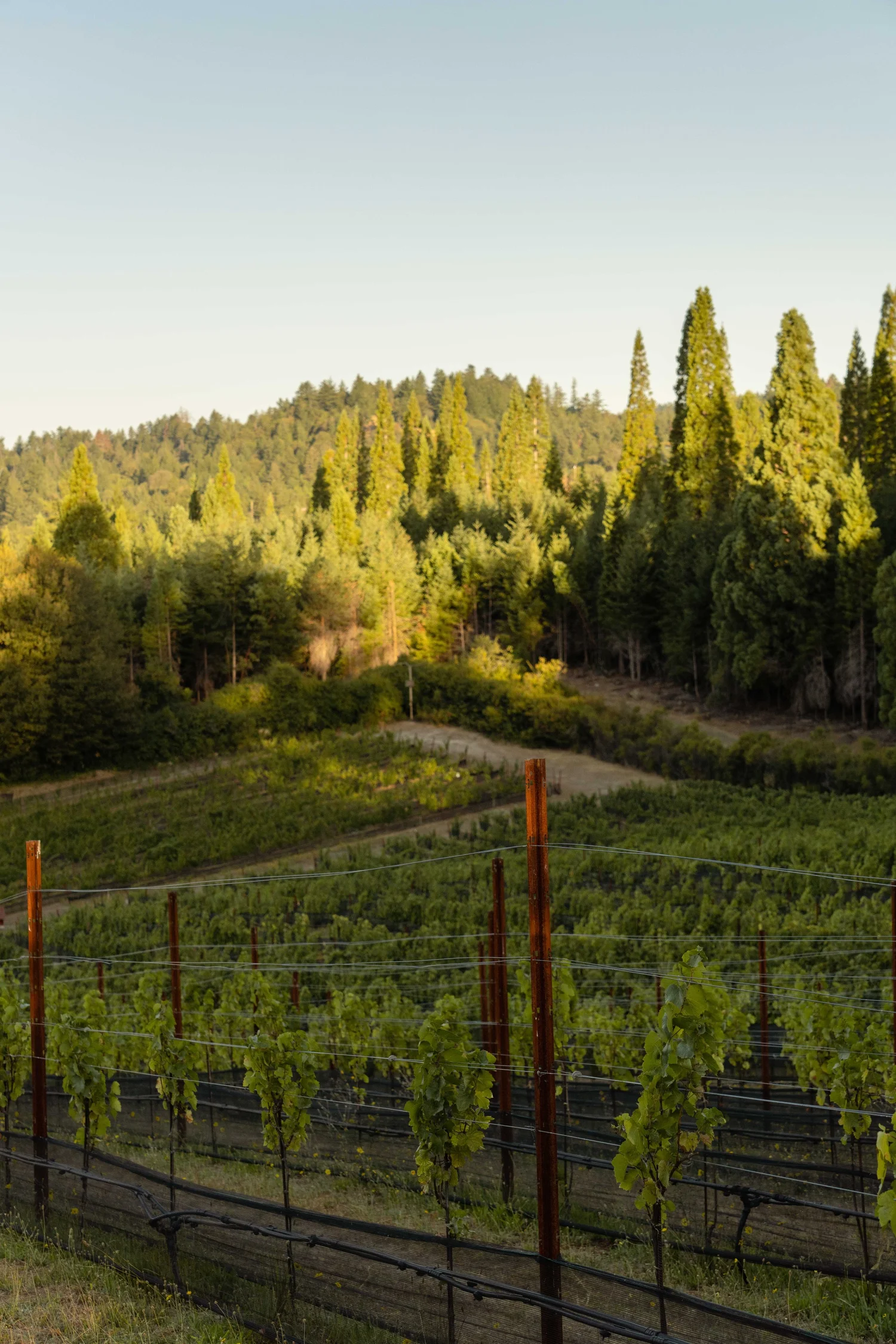
Farming the edge of California
Six chapters: a name carried across an ocean, four seasons on a restless mountain range, the farming, the cellar, the people, and what we're willing to measure.
Chapter I · The name
A Danish grandmother's name
Madson is Cole's paternal grandmother's name — a Danish immigrant who crossed an ocean for the chance to belong somewhere. Journey, opportunity, belonging. It felt like the right thing to put on a bottle made by people who farm land they mostly don't own and share it with everyone who shows up.
The four faces on the label are the same person in four seasons: pruning, waiting, watching the fog, picking. A year of work in one mark.

Chapter II · Four seasons
Seasons leave a mark
Winter
The pruning face
Rain in the redwoods, mud to the ankles, and every vine touched by hand. What we cut in February decides the crop in September.
Spring
The waiting face
Cover crop knee-high, frost nights watched hour by hour, first shoots out. The rosé and the whites go into bottle.
Summer
The fog face
Marine air over the ridge most mornings, canopy work, sheep off the slopes. Long hang time is the whole advantage here.
Autumn
The harvest face
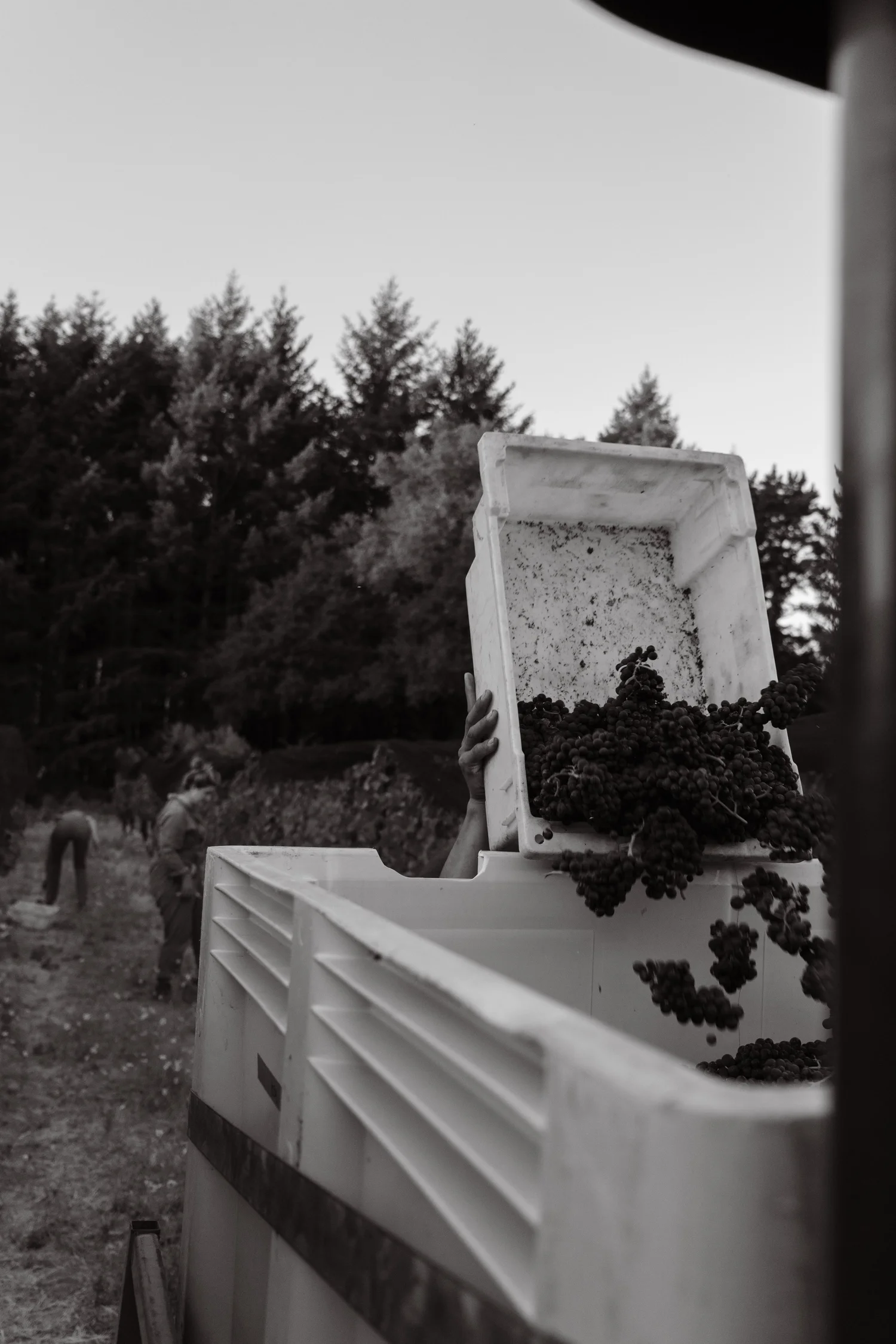
Picking in the dark into small bins, fifteen sites in six weeks, the cellar smelling of ferment. Then the release party.
Chapter III · Farming
Farming before winemaking
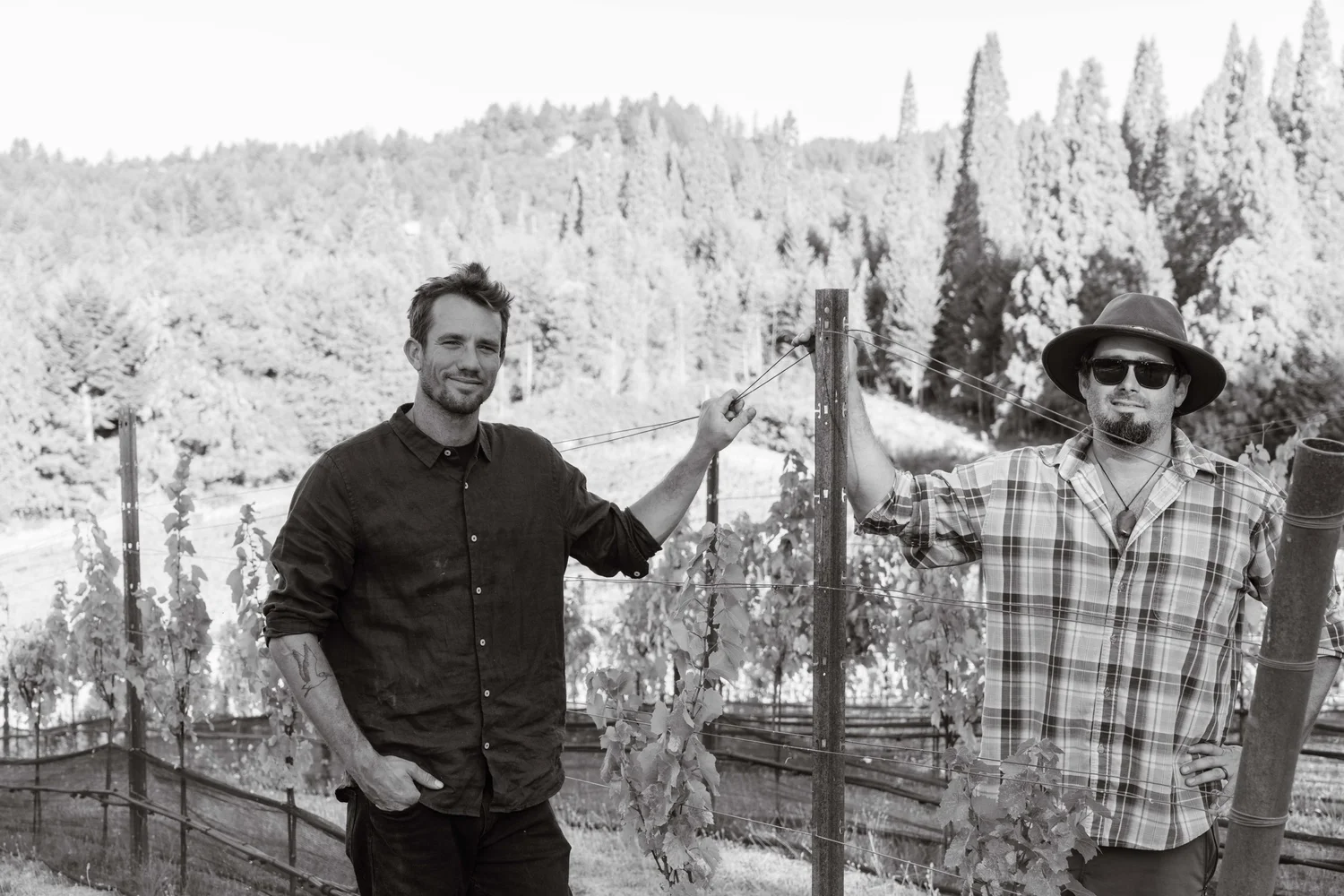
Cole came up in these hills working other people's vineyards before he made a drop of his own wine. Every site we control is farmed organically — cover crops, compost, sheep where the slope allows, no systemic chemistry. We pick by hand, in the dark, into small bins.
The work is repetitive and physical and it is where the wine is actually decided. By the time fruit reaches the crush pad, the interesting choices have already been made.
Chapter IV · The cellar
Guidance rather than control
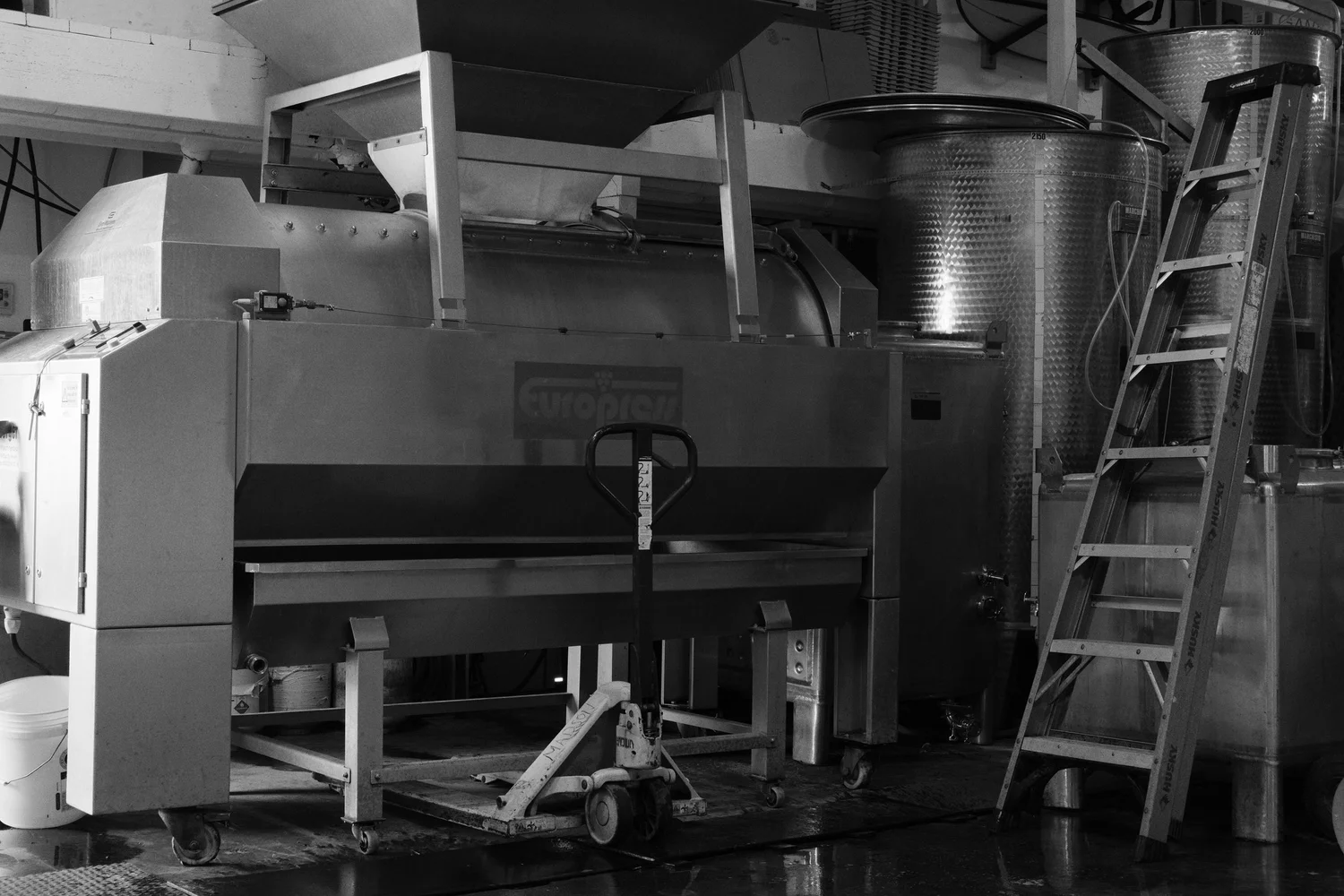
Native fermentation. Whole clusters when the stems have ripened enough to earn it. Neutral barrels, concrete, and old puncheons — nothing that leaves a signature of its own. Minimal sulfur, no fining, light filtration only when a wine asks for it.
We taste every lot weekly and mostly decide to do nothing. That restraint is the house style.
Chapter V · The people
Who does the work
Cole Thomas
Winegrower
Farms the sites, makes the wine, still drives the pick truck.
Read more +
Cole grew up in the Santa Cruz Mountains and spent a decade farming other people's vineyards before bottling anything under his grandmother's name. He runs the vineyard calendar, walks every block weekly through the season, and makes the calls in the cellar — most of which are decisions to leave a wine alone.
The vineyard crew
Farming
The same hands prune, thin, and pick every site, every year.
Read more +
Continuity is the reason the wines taste like themselves. The crew knows which rows on Ascona ripen a week early and which corner of Toyon holds frost. That knowledge doesn't live in a spreadsheet; it lives in people who come back each season.
The tasting room team
Hospitality
They pour, they cook, they book the music.
Read more +
On Ingalls Street the bar is run by people who have picked fruit and cleaned tanks. They will tell you honestly which bottle is drinking best today, what's about to sell out, and who is playing on Friday.
A short history
2016
First harvest, borrowed space, four barrels.
2019
Ingalls Street winery and tasting room opens in Santa Cruz.
2021
Every site we control is farmed organically.
2023
Solar array covers winery electricity.
2025
Fifteen vineyard sites across the range and the coast.
Chapter VI · Responsibility
What we measure, and how
100%
Organically farmed acreage on sites we control
Solar
Winery electricity, on-site array at Ingalls Street
Scope 1 & 2
Emissions measured annually and offset
Annually
Reported each spring with methodology attached
Reporting year 2025. Figures cover the Ingalls Street winery and the vineyard blocks we farm directly. Offsets purchased through a verified partner; the full methodology and next targets are published with each annual update.